
Geography and orientation
Puerto Plata works best as a historic Atlantic city connected to a much wider north-coast travel region, not as one oversized resort zone. The city itself anchors the trip with Fortaleza San Felipe, the Malecón, the historic center and urban life; beaches, mountain terrain, adventure excursions and watersports towns spread well beyond the center.
Keep the geography explicit: Sosúa and Cabarete are separate towns east of Puerto Plata city; Damajagua is an inland adventure near Imbert; Maimón is the setting for Amber Cove; and Punta Rucia, Cayo Arena and La Isabela belong to a farther-west corridor. They can fit one north-coast itinerary without being mislabeled as Puerto Plata neighborhoods.
Why go
Come for a north-coast trip that does not force you to choose between city history and outdoor adventure. Puerto Plata can pair a real urban center and Atlantic waterfront with beaches, waterfall canyoning, watersports towns and farther-west marine excursions.
The city has enough historical substance to stand on its own. Fortaleza San Felipe and the historic center give context to Puerto Plata as a port city rather than treating culture as a rainy-day backup to the beach.
The wider region rewards travelers who choose their base intentionally. Puerto Plata city, a resort zone, Sosúa and Cabarete solve different trip goals, and the strongest itinerary accepts those differences instead of flattening the coast into one destination.
Areas and neighborhoods
Puerto Plata city
The strongest base for history, the Malecón, Fortaleza San Felipe, the historic center, museums and everyday urban access.
Choose the city when culture and mixed exploration matter more than an all-inclusive beach setup.
Playa Dorada / Costa Dorada
Resort and beach zones east of the city, useful for travelers prioritizing hotel convenience and an easy beach base.
A resort base is convenient, but it is not the same experience as staying in Puerto Plata city.
Cofresí / Maimón
Western coastal context that includes resorts and the Maimón cruise corridor; Amber Cove belongs here rather than in the city center.
Cruise visitors arriving at Amber Cove begin from a different geographic position than visitors arriving at Taíno Bay.
Sosúa
A distinct town with beach, diving and snorkeling appeal, international influences and active visitor infrastructure.
Beachfront public-space and vendor organization changed materially in 2026; check current conditions rather than relying on old photos or directions.
Cabarete
A distinct beach town whose strongest visitor identity is surf, kitesurf, windsurf and an independent coastal lifestyle.
Choose Cabarete when wind and wave sports are a central reason for the trip, not as a substitute name for Puerto Plata city.
Imbert / Damajagua
The inland adventure corridor for 27 Charcos de Damajagua, where the experience involves guided hiking, water, jumps and slides.
Treat Damajagua as a physical adventure, not passive sightseeing; current route, safety and participation requirements should be confirmed.
Luperón / La Isabela
A farther-west maritime and archaeological corridor that adds early-colonial history and a very different landscape from Puerto Plata city.
La Isabela deserves careful historical framing; avoid sweeping 'first in the Americas' superlatives without precise attribution.
Punta Rucia / Cayo Arena
A farther-west coastal and marine excursion corridor, with Punta Rucia serving as a common departure area for Cayo Arena.
This is a deliberate day-trip or western-coast plan, not a quick stop inside Puerto Plata city.
Essential experiences
Read the city from Fortaleza San Felipe and the Atlantic waterfront
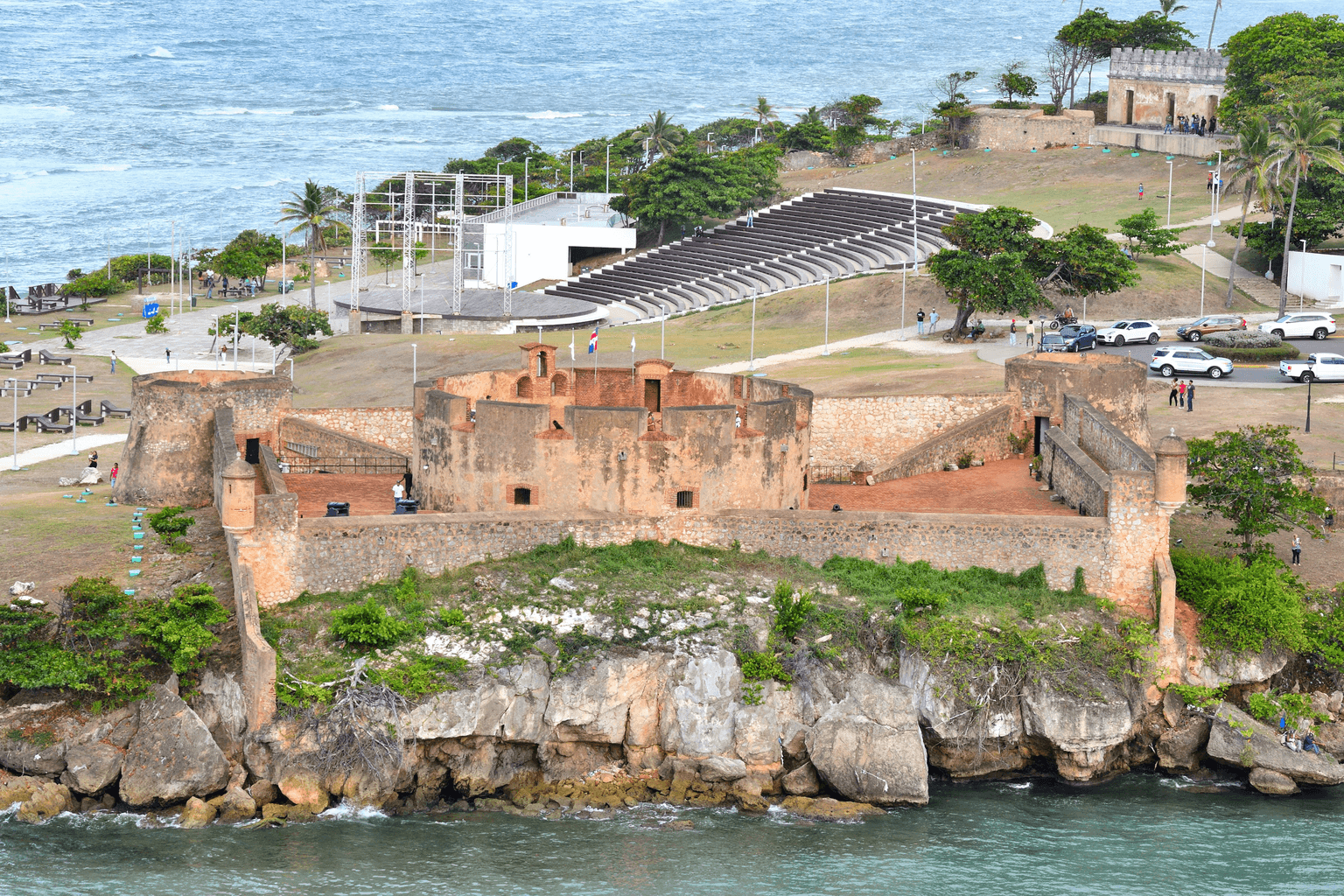
Use the 16th-century fort, La Puntilla and the Malecón as an introduction to Puerto Plata’s coastal history and present-day urban setting.
The fort is an anchor, not evidence that the entire historic center is an inscribed UNESCO World Heritage Site.
Walk the historic center with the right UNESCO context
Explore the city center as a living urban district with historic architecture and institutions. UNESCO currently lists the Historical Centre of Puerto Plata on the Dominican Republic’s Tentative List.
Say Tentative List, not World Heritage Site.
Treat Damajagua as a real adventure
27 Charcos combines forest hiking with guided jumps and slides through waterfalls and pools. Official tourism guidance notes that most excursions use a smaller sequence of falls and that the full route demands stronger fitness.
Confirm the current route, guide, equipment, swimming expectations and participation limits before going.
Choose a north-coast beach experience deliberately
Playa Dorada and Costa Dorada fit resort convenience; Sosúa offers a different town-and-water experience; Cabarete is strongest for surf and wind sports. These are not interchangeable beach labels.
Sea, wind and beach conditions change; avoid promising one universal swimming or watersports experience.
Give Cabarete its own watersports day
Cabarete’s identity is closely tied to surf, kitesurf and windsurf. Dominican tourism authorities renewed that positioning in 2026 through the Cabarete Surf & Wind City campaign.
Match the activity to current conditions and use qualified operators or instruction where appropriate.
Go west only when the extra geography is part of the plan
Punta Rucia and Cayo Arena can add snorkeling and a marine excursion, while La Isabela adds an archaeological and colonization-history stop. They make more sense as a deliberate western circuit than as downtown Puerto Plata add-ons.
Confirm current boat, weather and protected-area conditions for marine excursions.
Culture and history
Puerto Plata’s value begins with the fact that it is a city, not only a resort gateway. The fort, Atlantic waterfront and historic center make port history, urban development and architecture part of the trip. UNESCO places the Historical Centre of Puerto Plata on the Dominican Republic’s Tentative List; that status deserves accurate wording and should never be upgraded into an inscribed World Heritage designation.
Fortaleza San Felipe dates to the 16th century and later served other functions, including use as a prison. Present it as a surviving military and historical structure tied to Puerto Plata’s Atlantic position, not as a decorative photo stop detached from the city.
Farther west, the archaeological site of La Isabela preserves material connected with the settlement established during Columbus’s second voyage in 1493. The site belongs in a history of colonization, encounter, violence and exchange; WSD should avoid romanticized or sweeping 'first in America' formulas that erase Indigenous history or overstate what a tentative-list nomination proves.
Puerto Plata also has living cultural identities that deserve their own stories, including carnival and the taimáscaro tradition. The destination hub can point toward that cultural depth without turning one festival image into a complete account of the city.
Food
Describe the north coast through eating contexts rather than inventing one signature Puerto Plata dish. In the city, Dominican cooking, seafood and contemporary urban dining sit alongside cafés and visitor-oriented restaurants; resort zones organize meals differently; Sosúa and Cabarete add more beach-town and international influences.
Use food as part of the geography. A traveler based in Puerto Plata city should not be sent across the region for a generic restaurant list when the goal is to understand local context. Venue-level recommendations belong in WSD’s Food or Nightlife systems when they are independently verified.
Where to base yourself
Puerto Plata city — best for history, the Malecón, urban life and a mixed itinerary.
Playa Dorada / Costa Dorada — best for resort convenience and an easy beach-oriented base.
Cabarete — best for travelers building the trip around surf, kitesurf, windsurf and independent beach-town energy.
Sosúa — best for beach and diving access with a more active town setting; verify the current beachfront organization after the 2026 redevelopment work.
Western Puerto Plata — best for travelers intentionally prioritizing Luperón, La Isabela, Punta Rucia or Cayo Arena rather than first-time visitors wanting one central base.
Getting there
Gregorio Luperón International Airport (POP) is the principal air gateway for the Puerto Plata–Sosúa–Cabarete north-coast cluster. Avoid building an evergreen guide around airline route lists because schedules change.
Cruise visitors need a geography check before planning. Amber Cove serves the Maimón area west of Puerto Plata city, while Taíno Bay is associated with the city itself. The same words 'Puerto Plata cruise' can therefore produce very different starting points.
Getting around
Puerto Plata city can support walking for selected central areas, but the wider destination is too spread out to treat as one walkable zone. Beaches, Damajagua, Sosúa, Cabarete and the western corridor require road transport and deliberate sequencing.
Use reputable transport and confirm the exact pickup and return plan for excursions. Treat minute-perfect drive times as estimates rather than guarantees; traffic, road works, weather and the traveler’s actual base can change them.
The Teleférico de Puerto Plata is not operating. A 2026 replacement procurement is in progress. Land access toward Loma Isabel de Torres has been subject to special traffic controls, so WSD should not publish a precise current road-access procedure until it is verified again immediately before publication.
When to go
December through April is commonly treated as the drier high-season period for the north coast, but Puerto Plata is not a one-season destination. Beach, surf, wind and waterfall conditions depend on weather and recent rainfall rather than a calendar slogan.
If the trip depends on water activities, marine excursions or waterfall access, verify the current conditions shortly before the visit. Atlantic hurricane season is a broad June-through-November planning framework, not a trip-specific forecast.
Suggested trip length
2 nights — enough for a city-focused Puerto Plata visit centered on the historic core, fort, waterfront and a measured amount of beach or museum time.
3–4 nights — a strong first trip combining Puerto Plata city with one beach or adventure day such as Damajagua, Sosúa or Cabarete.
4–6 nights — better for a meaningful north-coast circuit that adds another base and deliberately includes the western or eastern coastal experiences without spending the whole trip in transit.
Nearby excursions
27 Charcos de Damajagua — inland guided adventure near Imbert; physical demands and the active route matter.
Cabarete — a separate watersports town east of Puerto Plata, strongest for surf, kitesurf and windsurf identity.
Sosúa — a separate beach and diving town whose beachfront organization changed materially in 2026.
Punta Rucia / Cayo Arena — a farther-west marine day that should be planned around boat, sea and protected-area conditions.
La Isabela — a farther-west archaeological stop that needs careful colonial-history framing.
Current notes
Frequently asked questions
Is the Puerto Plata cable car open?
No current WSD planning should assume it is operating. As of August 26, 2026, the replacement system was still in a government procurement process. Verify the latest official status and current land-access arrangements for Loma Isabel de Torres before your visit.
Is Puerto Plata’s historic center a UNESCO World Heritage Site?
No. UNESCO lists the Historical Centre of Puerto Plata on the Dominican Republic’s Tentative List. That is different from inscription on the World Heritage List.
Should I stay in Puerto Plata, Sosúa or Cabarete?
Choose Puerto Plata city for history and mixed exploration, Sosúa for beach/diving with active town infrastructure, and Cabarete when surf and wind sports are central. Resort travelers may prefer Playa Dorada or Costa Dorada.
Do visitors normally complete all 27 Charcos de Damajagua?
Not necessarily. Official tourism guidance says many excursions use a smaller sequence of falls and that reaching the full set is for more active, physically fit adventurers. Confirm the current route and participation requirements with the operator.
Are Amber Cove and Taíno Bay the same cruise port?
No. They are different terminals and place cruise visitors in different parts of the Puerto Plata area. Confirm your actual terminal before planning a short port day.
How many days do I need in Puerto Plata?
Two nights can support a city-focused visit; three to four nights is stronger for city plus beach or adventure; four to six nights works better for a broader north-coast circuit with another base.