
Santiago de los Caballeros
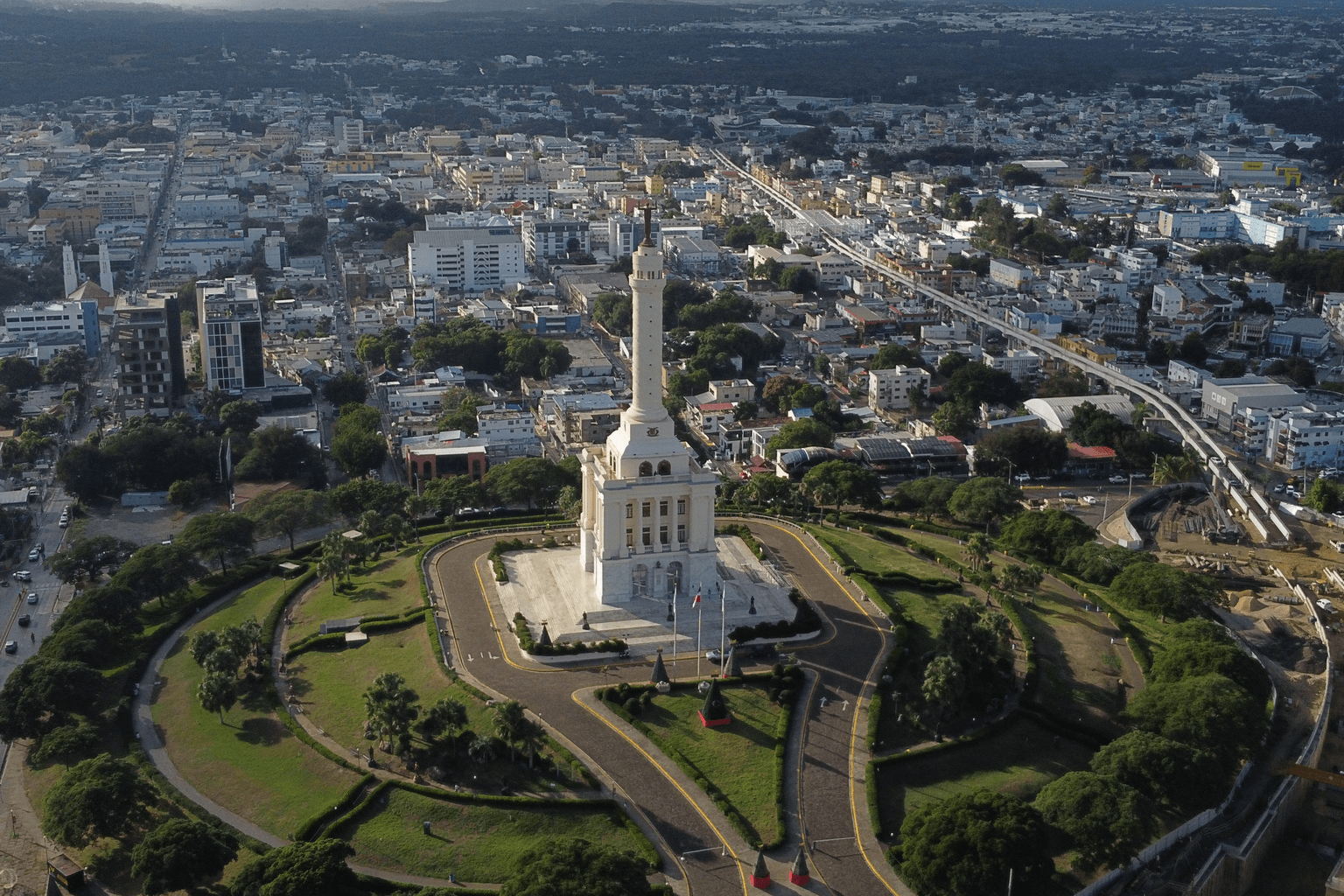
The Monumento a los Héroes de la Restauración rises above central Santiago de los Caballeros. Cropped and resized WSD derivative of a photograph by ThePapo309, CC BY-SA 4.0. · ThePapo309 / Wikimedia Commons — CC BY-SA 4.0; cropped and resized by WSD. · Source · License
Geography and orientation
Santiago de los Caballeros is an inland Dominican city in the Cibao Valley, framed by mountain systems and connected culturally and economically to the wider northern interior. It is not a beach or resort destination: its appeal is urban Dominican life, Restoration-era civic symbolism, museums and arts, tobacco and cigar heritage, baseball, Cibao food and a contemporary city that functions as a regional hub.
WSD treats Santiago city, Santiago Province and the wider Cibao as related but different geographies. The Monumental area and historic center form the clearest visitor core; Centro León sits farther east in Villa Progreso; modern residential and dining sectors such as Los Jardines and Villa Olga add another city layer; STI lies outside the center in the Licey corridor. Jarabacoa, Puerto Plata and other regional destinations are excursions, not Santiago neighborhoods.
Why go
Santiago rewards travelers who want the Dominican Republic beyond the coastal-resort frame. The city concentrates Cibao identity in a way that is easy to experience: the Monumento and Restoration memory, Centro León, a historic-commercial center, live cultural institutions, baseball, street food and a tobacco economy that links agriculture, craft, labor and industry.
It also works because Santiago feels lived-in rather than staged for tourism. A good visit should mix major institutions with normal city rhythms—coffee, local food, evening culture and neighborhood movement—while using the city as a gateway to the mountains and north coast only when those excursions genuinely fit the trip.
Areas and neighborhoods
Monumental area
The civic and cultural zone around the Monumento a los Héroes de la Restauración and Gran Teatro del Cibao, with major avenues, public gardens and easy visual orientation around the city’s best-known landmark.
A strong first-time base or starting point. Check event access and nearby roadworks rather than assuming every museum/theater space is open on demand.
Centro Histórico
The older central grid around Parque Duarte, Calle del Sol, the cathedral, Palacio Consistorial, Centro Cultural Ercilia Pepín, Casa de Arte and connected heritage streets.
Walk selectively. Calle del Sol remains under staged reconstruction in 2026, so pedestrian and vehicle access can change block by block.
Villa Progreso / Centro León
The area anchored by Centro León on Avenida 27 de Febrero, useful for visitors who want one of the country’s strongest cultural institutions without treating it as part of the historic-center walking loop.
Check Centro León’s live calendar and visitor hours before setting a rigid itinerary.
Los Jardines / Villa Olga
Modern central-northern residential and commercial sectors with hotels, cafés, restaurants and everyday city services that show Santiago beyond its monuments.
Useful for dining and a contemporary-city base; expect to use taxis, rideshare or a car to connect major sights.
STI / Licey corridor
The airport-access corridor around Cibao International Airport outside Santiago’s cultural core.
Choose it for flight convenience, not as a substitute for staying in the city if museums, food and historic streets are the priority.
Essential experiences
Start at the Monumento, then understand what it represents
The Monumento a los Héroes de la Restauración is Santiago’s defining civic landmark and a museum space tied to the Restoration story. Its setting also helps visitors understand the scale and layout of the modern city.
Treat interior access, exhibitions and viewpoint availability as current operating details; verify them before a tightly timed visit.
Give Centro León real time
Centro León is not a token museum stop. Its exhibitions and collections use art, archaeology, ethnography, popular culture, photography and other disciplines to examine Dominican identity in a Caribbean context.
Check the institution’s current exhibition and activity calendar; do not rely on an old list of rooms or temporary shows.
Walk the historic center with 2026 conditions in mind
Parque Duarte, Calle del Sol and nearby civic, religious and cultural buildings reveal Santiago’s older urban fabric and commercial history. Several public spaces have been restored, while Calle del Sol remains a live reconstruction project.
Build flexibility into the walk. Access and traffic patterns can change around active work zones.
Learn the tobacco story without turning it into an ad
Tobacco and cigar making are deeply connected to the Cibao economy and Santiago identity. A legitimate factory visit can show sorting, preparation, rolling, packing and the labor behind a globally known Dominican industry.
Confirm the visitor program directly before going. Current age, reservation, weekday and access rules belong to the operator, not evergreen WSD copy.
Eat Santiago as a Cibao city
Santiago’s food experience is strongest when street traditions and everyday Dominican eating sit beside the city’s newer restaurant scene. Local tourism material highlights quipe, rikitaki and yaroa among recognizable Santiago street foods.
Use individual restaurants as fresh recommendations only after an operational check; the destination guide should explain food culture rather than freeze a ranking.
See baseball when the season is actually on
Estadio Cibao and Águilas Cibaeñas make professional winter baseball one of Santiago’s clearest live cultural experiences. The atmosphere matters as much as the box score for visitors trying to understand Dominican baseball culture.
Games are seasonal, generally mid-October through late January. Check the current LIDOM/team schedule before promising a game.
Use the city’s live arts calendar
Gran Teatro del Cibao, Casa de Arte, Centro Cultural Ercilia Pepín and other venues keep Santiago’s cultural identity active rather than museum-only. Merengue típico, theater, concerts, exhibitions and community events belong in the trip when calendars line up.
Do not promise a specific performance or live-music format without checking the actual date and venue calendar.
Culture and history
Santiago’s history is layered rather than reducible to one founding plaque. Local tourism history traces the city from a late-15th-century settlement, through a period at Jacagua, to its present location after the destructive 1562 earthquake. WSD should present that sequence carefully and avoid turning a complex relocation history into a false claim that every period occupied the same site.
The city’s public identity is also closely tied to the Dominican Restoration. The Monumento a los Héroes de la Restauración is the clearest civic symbol of that memory, while nearby cultural spaces and public art keep the Restoration story connected to Santiago’s present-day sense of place.
The Cibao tobacco economy is another major thread. La Aurora dates its Santiago roots to 1903, but the deeper story is larger than one company: agriculture, leaf processing, skilled handwork, factory labor, trade and entrepreneurship all helped make tobacco central to the region’s identity. WSD should describe that system without repeating commercial “capital of the world” language as neutral fact.
Santiago’s culture is living and seasonal too. Merengue típico, carnival traditions, baseball, visual arts and theater are not static heritage props. They make more sense when visitors encounter them through current calendars, active institutions and neighborhood life rather than through unsupported “birthplace” claims.
Food
Santiago’s food chapter should begin with the Cibao and the street, not a generic list of Dominican dishes. Local tourism material identifies quipe, rikitaki and yaroa as recognizable Santiago street-food traditions, while catibías and other Dominican staples appear naturally in historic-center eating.
The city also has a broad contemporary restaurant and café culture spread beyond the old center into sectors such as Los Jardines and Villa Olga. That mix is part of Santiago’s appeal: a visitor can move from quick street food and traditional Dominican cooking to modern cafés and chef-driven interpretations without pretending one neighborhood owns the whole scene.
WSD should resist declaring one restaurant or one dish the definitive Santiago experience. Businesses, hours and chefs change. The evergreen value is the combination of Cibao ingredients and habits, migration influences, urban street food and a dining culture connected to the agricultural north.
Where to base yourself
Monumental / central Santiago — best first base
Stay near the Monumental area if you want the easiest first-time balance of landmark orientation, central access, theaters, restaurants and short rides to the historic center. It is the most intuitive visitor base without pretending that all of Santiago is walkable from one hotel.
Centro Histórico — best for heritage focus
A central or historic-center stay puts Parque Duarte, Calle del Sol and older civic buildings closer at hand. In 2026, however, parts of Calle del Sol remain under reconstruction, so verify access around the exact lodging and do not choose solely from an old map.
Los Jardines / Villa Olga — best for modern city life
These sectors work for travelers who value restaurants, cafés, services and a contemporary residential-commercial environment. They trade door-step heritage for a more everyday modern Santiago feel and usually require short vehicle trips to the main cultural sights.
Getting there
Cibao International Airport (STI) is Santiago’s principal air gateway. The airport is outside the cultural center in the Licey corridor, so plan an onward taxi, rideshare, rental car or arranged transfer rather than treating arrival at STI as arrival downtown.
By road, Santiago connects to Santo Domingo through the Duarte corridor and to the north coast and central mountains through the wider Cibao network. Road conditions, construction and traffic can change actual journey times, so WSD should not publish minute-perfect transfer promises.
Travelers arriving from Puerto Plata, Jarabacoa or other regional destinations should think of Santiago as a separate urban stay, not simply a waypoint. Combining regions works best when each destination gets enough time to justify the transfer.
Getting around
Santiago is too spread out for a purely walking itinerary. Walking works best within compact areas such as parts of the historic center and around the Monumental zone; taxis, rideshare, private vehicles and local transport connect the larger city.
The Santiago Teleférico has operated since 2024 as part of the city’s public-transport system. It is real urban mobility, but it should not be oversold as a substitute for all visitor transportation or confused with the Monorriel.
The Monorriel is still a construction/testing project in the latest official material checked for this package. Do not route visitors onto it until normal passenger service is independently confirmed. Construction around the system can also affect surface traffic.
When to go
Santiago works year-round as an urban destination. The best dates depend less on a beach-weather formula than on what you want to experience: museum and food travel can happen in any season, while carnival, baseball and major cultural events require the right calendar.
February is especially relevant for Santiago carnival traditions. Professional winter baseball generally runs from mid-October through late January, but exact home games must be checked against the current league/team schedule.
June through November is Atlantic hurricane season. Santiago is inland, but heavy rain and regional tropical weather can still affect roads, flights and excursions. Use current forecasts near travel rather than turning seasonal climatology into a prediction.
Suggested trip length
1 day — compressed introduction
Prioritize the Monumento, Centro León or the historic center, and one deliberate food experience. Trying to add mountains or the north coast turns the day into transit.
2 nights — strong first visit
This is the best default: Monumental Santiago, Centro León, historic streets, Cibao food and room for an evening cultural or baseball experience when the calendar cooperates.
3 nights — deeper city
Use the extra day for tobacco heritage, more neighborhood food, Casa de Arte or another live institution, and a slower understanding of the city rather than stacking distant excursions.
Nearby excursions
Jarabacoa and the central mountains are natural extensions for travelers who want hiking, rivers and cooler highland landscapes after the city. Treat Jarabacoa as its own destination and verify road/weather conditions rather than presenting it as a Santiago neighborhood.
Puerto Plata and the north coast can also pair with Santiago, creating a strong inland-city plus coast itinerary. The value is contrast: Santiago for Cibao urban culture and Puerto Plata for Atlantic-coast history and beaches. La Vega can be relevant seasonally, especially around carnival, but should be planned as a separate stop.
Current notes
Frequently asked questions
Is Santiago worth visiting if I am not going to the beach?
Yes. Santiago is one of the strongest Dominican urban-cultural destinations: Monumento, Centro León, historic streets, Cibao food, tobacco heritage, baseball and a contemporary city experience. It works best when you want culture and regional life rather than a resort stay.
How many days do I need in Santiago?
Two nights is a strong first visit. One day is possible but compressed; three nights gives more room for food, tobacco heritage, live culture and neighborhoods without turning the trip into a checklist.
Is Santiago’s historic center fully open during the Calle del Sol project?
The historic center remains visitable, but Calle del Sol is under staged reconstruction in 2026 and access can change by block. Keep the route flexible and check current conditions before a tightly scheduled walking plan.
Can I ride the Santiago Monorriel now?
Do not plan on it yet. The latest official project update used for this package still described construction and testing phases rather than normal passenger service. The Santiago Teleférico is a separate system and has operated since 2024.
Can I see a baseball game in Santiago any time of year?
No. Professional winter baseball is seasonal, generally from mid-October through late January. Check the current Águilas Cibaeñas/LIDOM schedule for home games at Estadio Cibao.
Do Santiago cigar-factory tours require planning ahead?
Yes. Tobacco heritage is a major part of the city, but factory visitor programs set their own age, reservation, weekday and access rules. Confirm the current program directly before going rather than relying on an old guide.